
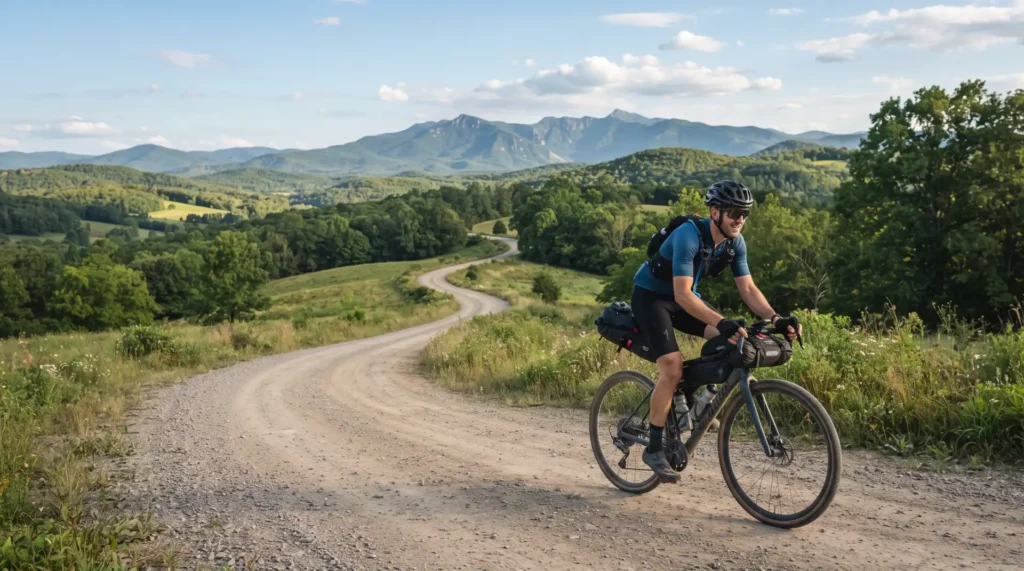
Cycling in the United States is changing in ways that go far beyond the introduction of new bicycle models.
For decades, bicycles were often separated into a few familiar categories. Road bikes were associated with fitness and racing, mountain bikes with trails and recreation, and hybrid bikes with casual riding and commuting. Today, the boundaries between these categories are becoming less distinct.
Modern riders have more choices than ever.
A cyclist can use a lightweight road bicycle for long-distance fitness riding, a gravel bike for paved and unpaved roads, an electric bicycle for commuting, a cargo e-bike for family transportation, or a mountain bike for exploring trails. Folding bicycles are useful for riders with limited storage, while bikepacking equipment allows cyclists to turn a bicycle into a platform for multi-day adventures.
These changes are part of a larger shift in American cycling culture.
The bicycle is increasingly being viewed not only as recreational equipment but also as a transportation option, fitness tool, outdoor adventure vehicle, and practical way to make short trips.
At the same time, American cities and communities continue to work on bicycle infrastructure. Protected bike lanes, multi-use trails, bicycle crossings, traffic-calming projects, and connected networks are becoming increasingly important parts of transportation planning.
PeopleForBikes’ 2026 City Ratings reported that 555 U.S. cities achieved a score of at least 50, compared with 234 cities in 2025. The organization also reported an increase in average city scores under its updated evaluation system.
These developments help explain why bicycle trends in 2026 are so diverse.
The future of cycling is not centered on one type of bicycle. Instead, it is about giving Americans more ways to ride and making bicycles useful for a wider variety of lifestyles.
E-Bikes Are Becoming a Major Part of Cycling
Perhaps the most visible change in American cycling is the growth and diversification of electric bicycles.
An e-bike combines traditional pedaling with an electric motor that provides assistance. Depending on the model and local regulations, the rider can receive assistance while pedaling, making hills, longer distances, and heavier loads easier to manage.
This has opened cycling to people who might otherwise find certain rides too difficult.
For example, a commuter who lives several miles from work may avoid traditional cycling because of hills, distance, heat, or the concern of arriving at work tired. An e-bike can reduce some of those barriers.
The same applies to recreational riding.
Someone who has not ridden a bicycle regularly for years may find an electric bicycle more approachable. A rider can also use the assistance level strategically, using more assistance on hills and less on flat sections.
The U.S. e-bike market is also becoming more varied. Consumers can choose from commuter e-bikes, electric mountain bikes, cargo e-bikes, folding models, and bicycles designed for longer road rides.
The Federal Highway Administration has been examining e-bike use, infrastructure, safety, transportation, and related issues as e-bike adoption continues to develop in the United States.
One important consideration for buyers is that e-bikes are not simply conventional bicycles with motors attached. Weight, battery systems, brakes, tires, frame construction, motor placement, and electrical components all influence how an e-bike rides.
Consumers should also understand their local rules before purchasing or operating an e-bike because classifications and regulations can vary by jurisdiction.
 E-Bikes Are Moving Beyond Recreation
One of the more significant developments is that e-bikes are increasingly being used for everyday transportation.
For some Americans, the bicycle is becoming a realistic option for short trips that would otherwise be made by car.
A rider might use an e-bike to travel to work, visit a grocery store, pick up a prescription, reach a train station, or complete errands around a neighborhood.
This is particularly relevant in communities where destinations are relatively close together.
E-bikes can also be useful for riders who need to travel farther than they would normally consider cycling. Electric assistance can reduce the physical barrier associated with distance and hills.
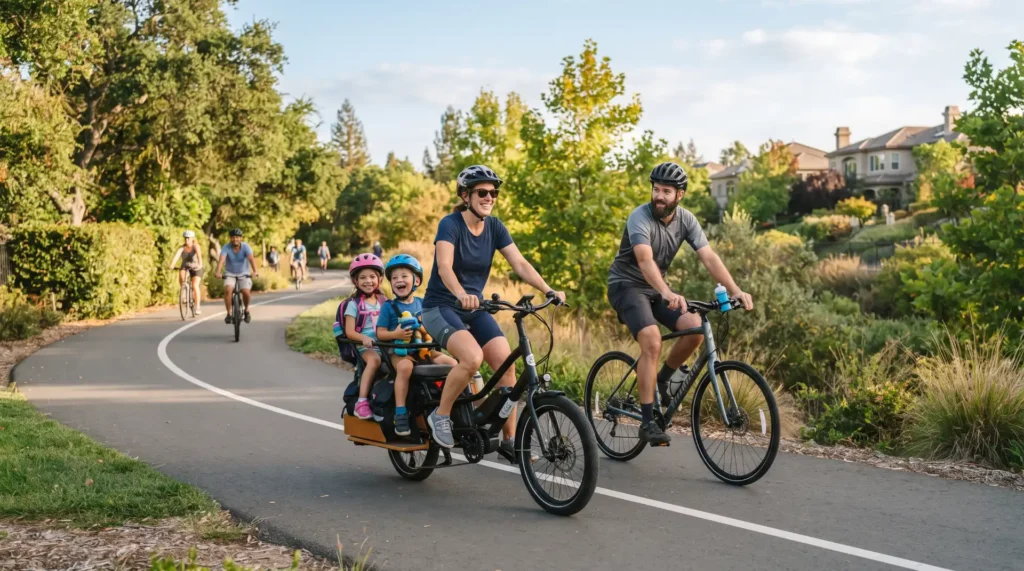
Cargo e-bikes take this concept even further.
A cargo e-bike can carry groceries, children, work equipment, or other items that would be difficult to transport on a conventional bicycle.
This is changing the perception of what a bicycle can accomplish.
Instead of asking whether a bike can replace a car entirely, many riders are asking which individual car trips could reasonably be replaced by bicycle trips.
That distinction makes cycling more practical for everyday American life.
Bicycle Infrastructure Is Becoming More Important
A bicycle is only part of the cycling experience.
The roads, trails, intersections, traffic patterns, and surrounding infrastructure have a major influence on whether people feel comfortable riding.
This is why bicycle infrastructure remains one of the most important bicycle trends in 2026.
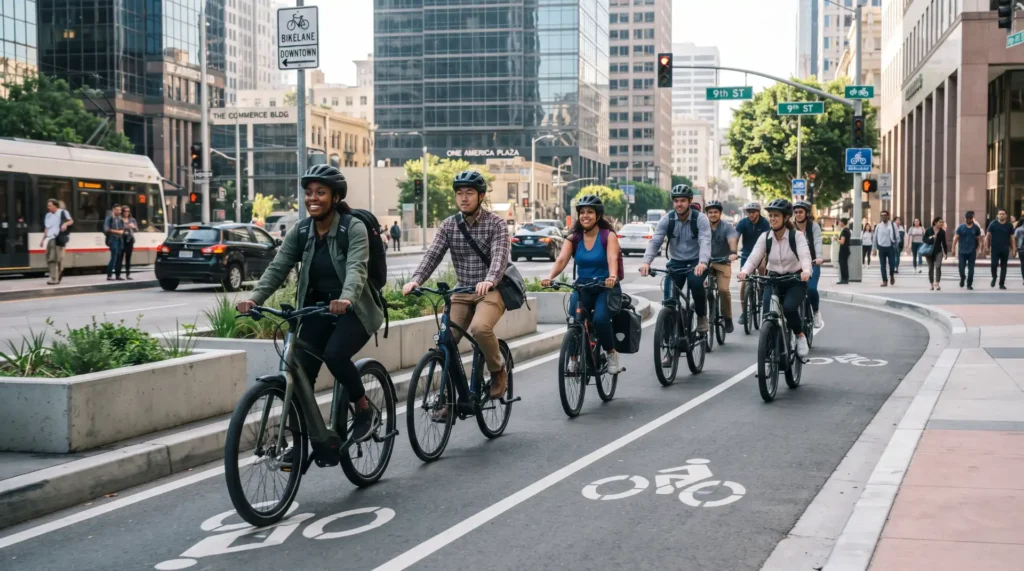
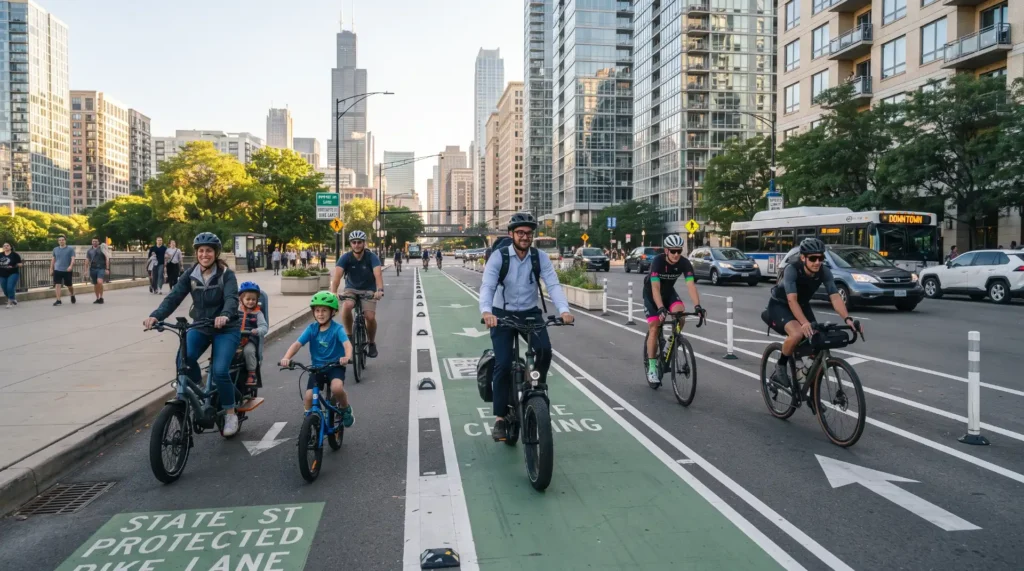
Protected bike lanes are designed to provide greater separation between bicycle traffic and motor vehicles. Multi-use trails can provide recreational and transportation opportunities away from busy roadways. Bicycle crossings and traffic-calming measures can also influence how comfortable people feel when traveling by bike.
PeopleForBikes’ 2026 city analysis reported improvements in bicycle network conditions across many U.S. communities. Its evaluation included factors such as bike network connectivity and access to low-stress infrastructure.
The Federal Highway Administration also identifies bicycle and pedestrian infrastructure as an important component of transportation planning and safety improvements.
The importance of connectivity cannot be overstated.
A short protected bike lane may be helpful, but a connected network can be much more useful. If a cyclist can safely travel from a residential neighborhood to a workplace, school, shopping area, park, or transit station, the bicycle becomes more practical for everyday transportation.
This is especially important for people who are interested in cycling but are uncomfortable riding alongside fast-moving traffic.
Cycling Is Becoming More Popular as a Commuting Option
Bicycle commuting is another area receiving increased attention.
Not every American lives close enough to work to cycle every day. However, commuting does not have to mean riding dozens of miles.
Short-distance trips can be a more realistic starting point.
Someone might cycle to a nearby office, train station, school, coffee shop, or shopping center. E-bikes can make these trips practical for riders who want additional assistance.
The bicycle industry has responded with bikes designed specifically for transportation.
Modern commuter bicycles often emphasize reliability and comfort. Riders may look for wider tires, comfortable geometry, reliable braking systems, integrated or easily mounted lights, racks, fenders, and practical gearing.
This differs from a competition-focused bicycle.
A commuter may not care about saving a few hundred grams of weight if a slightly heavier bike can carry a backpack, groceries, or work equipment.
The growth of bicycle commuting is therefore influencing bicycle design around practical everyday needs.
Gravel Bikes Continue to Attract American Riders
Gravel cycling has become one of the most interesting categories in modern bicycling.
Gravel bikes are designed to handle a combination of paved roads and unpaved surfaces. They typically offer more tire clearance than traditional road bikes and geometry intended to provide stability across changing terrain.
The category fits particularly well with American geography.
The United States has countless rural roads, gravel roads, forest routes, rail trails, and mixed-surface paths. Riders can often create routes that combine pavement with unpaved sections.
This gives gravel bikes considerable versatility.
A rider may use the same bike for a weekday commute, a weekend fitness ride, and an adventure route outside the city.
Gravel riding also connects closely with bikepacking.
Riders can add frame bags, seat bags, handlebar bags, and other equipment to carry supplies for longer trips.
As a result, gravel bikes are no longer viewed simply as a niche category for a specific type of cyclist. They are increasingly positioned as versatile bicycles for riders who do not want to be limited to one surface.
Bikepacking Is Expanding Bicycle Adventure
Bikepacking is another trend that continues to attract cyclists in the United States.
Traditional bicycle touring often involves larger panniers and a more heavily equipped bicycle. Bikepacking generally uses lightweight bags attached directly to different parts of the bike.
The approach allows riders to travel relatively light while exploring roads and trails.
One of the reasons bikepacking is appealing is that it can be scaled to different experience levels.
A beginner does not have to start with a week-long expedition.
A one-night trip close to home can introduce a cyclist to route planning, food preparation, navigation, weather management, campsite selection, and bicycle repair.
More experienced riders can plan longer adventures across states and regions.
The popularity of bikepacking also encourages riders to think beyond traditional cycling destinations.
Instead of driving to a location and riding a short loop, cyclists can make the journey itself part of the adventure.
 Road Cycling Remains Important
The growth of e-bikes, gravel bikes, and mountain bikes does not mean traditional road cycling is disappearing.
Road bicycles remain popular among riders interested in fitness, endurance, group rides, racing, and long-distance cycling.
Modern road bikes have also evolved.
Many models now provide greater tire clearance than older racing designs, allowing riders to use wider tires for improved comfort and stability.
Electronic shifting has also become increasingly common in higher-end bicycles.
For recreational cyclists, road riding continues to provide a simple way to build endurance and explore large distances.
Organized group rides, cycling clubs, charity rides, and recreational events continue to contribute to the social side of road cycling.
The category is changing, but it remains an important part of American cycling culture.
Mountain Biking Continues to Evolve
Mountain biking remains one of the most popular forms of recreational cycling in the United States.
Modern mountain bikes are highly specialized.
Cross-country bikes are designed around efficiency and climbing, trail bikes balance climbing and descending, and more aggressive models are designed for technical terrain and demanding descents.
Suspension technology has also continued to develop.
Modern mountain bikes may include sophisticated suspension systems, hydraulic disc brakes, dropper posts, and increasingly refined frame geometry.
Electric mountain bikes have created another major development.
An e-mountain bike can provide assistance on climbs while allowing the rider to experience off-road terrain.
However, riders should always check local trail rules before using an e-bike. Access policies can differ between parks, trail systems, and land-management agencies.
Trail etiquette is also important. Riders should stay on designated routes, respect closures, yield appropriately, and avoid damaging trails during unsuitable conditions.
Cargo Bikes Are Changing Everyday Transportation
Cargo bicycles deserve particular attention because they challenge traditional ideas about what bicycles are for.
A standard bicycle is designed primarily to carry one rider. A cargo bike is designed to transport substantially more.
Cargo bikes can carry groceries, children, packages, work equipment, camping supplies, or other loads.
Electric assistance has made cargo bicycles particularly interesting.
Carrying a heavy load can make hills and long distances difficult on a traditional bicycle. An electric motor can make the same journey more manageable.
For families living in bike-friendly communities, cargo e-bikes can become useful transportation tools.
Parents may use them for school drop-offs, errands, shopping, or trips to parks.
Businesses can also use cargo bicycles for local deliveries.
This does not mean cargo bikes are practical for every household or every trip. Weather, distance, road conditions, storage, charging access, and local infrastructure all matter.
But their growth demonstrates how bicycles are increasingly being considered transportation equipment rather than recreational equipment alone.
Bicycle Technology Is Becoming More Advanced
Technology has become an increasingly important part of cycling.
GPS computers can track routes, distance, speed, elevation, and other data.
Smartphones can provide navigation and route planning.
Electronic shifting systems can change gears electronically instead of relying on traditional mechanical cables.
Cycling computers can connect with sensors that monitor speed, cadence, heart rate, or other measurements.
Lighting technology has also improved.
Modern bicycle lights can be brighter, smaller, rechargeable, and easier to mount.
Some advanced systems can automatically adjust lighting patterns or connect with other electronic devices.
However, technology should not become a distraction.
A cyclist using a navigation device still needs to watch the road. Riders should avoid interacting with phones or complicated electronics while moving through traffic.
The purpose of cycling technology should be to make riding more useful and informed, not to replace basic awareness.
Bicycle Safety Is Becoming a Bigger Focus
Safety continues to be a central concern as more people ride.
Visibility is especially important for commuters who ride during early morning, evening, or nighttime hours.
Front and rear lights can make cyclists more visible, while reflective elements can provide additional visibility.
Helmet use is another important consideration.
A properly fitted helmet can provide protection during certain crashes, although it should not be considered a substitute for safe infrastructure or responsible road behavior.
Bicycle maintenance is also connected to safety.
A rider should periodically inspect tires, brakes, wheels, drivetrain components, and other important parts.
A worn brake pad or severely damaged tire can become a problem at an inconvenient time.
E-bike riders have additional considerations because of the electrical system and battery.
Manufacturers’ charging and storage instructions should be followed carefully, and riders should use compatible charging equipment.
The broader safety environment matters too.
The Federal Highway Administration recognizes infrastructure improvements as part of efforts to improve transportation safety for bicyclists and pedestrians.
Bicycle Maintenance Is Becoming More Technical
Modern bicycles can be surprisingly sophisticated.
A high-end bike may include hydraulic disc brakes, suspension components, tubeless tires, electronic shifting, carbon-fiber components, or an integrated electric system.
That makes maintenance increasingly important.
Basic maintenance remains accessible to most riders.
Checking tire pressure, cleaning the drivetrain, inspecting brake pads, lubricating the chain appropriately, and checking for loose components are useful habits.
More complicated work may require specialized tools and knowledge.
Suspension servicing, hydraulic brake bleeding, electronic drivetrain troubleshooting, wheel building, and e-bike electrical repairs are examples of jobs that may be better handled by an experienced bicycle shop.
Regular maintenance can also extend the useful life of a bicycle.
Instead of waiting for something to fail, riders can identify wear early and replace components before they become a bigger problem.
Tubeless Tires Are Becoming More Common
Tubeless bicycle tires are another technology that continues to gain attention.
Unlike traditional bicycle tires that use an inner tube, a tubeless system creates an airtight seal between the tire and rim.
Sealant inside the tire can help seal certain small punctures while riding.
Tubeless setups are particularly common among gravel and mountain bikers, although they are also used in other cycling categories.
There are advantages and disadvantages.
A properly installed tubeless system can reduce the likelihood of certain puncture-related interruptions and allow riders to experiment with different tire pressures.
However, setup can be more complicated than installing a traditional tube.
The system must be properly sealed, and sealant generally needs periodic attention.
For riders who prefer simple maintenance, traditional inner tubes may still be the preferred option.
Bicycle Fit Is Receiving More Attention
Another important trend is the increased attention being given to bicycle fit.
A bicycle that is the wrong size or poorly adjusted can be uncomfortable, particularly during long rides.
Frame size, saddle height, handlebar position, reach, and other factors influence how a cyclist interacts with the bicycle.
A professional bike fitting can be useful for riders who spend significant time cycling, particularly those experiencing persistent discomfort.
However, even casual riders can benefit from ensuring that their bicycle is correctly sized.
When purchasing a bike, consumers should avoid choosing a model solely because it looks good or has attractive specifications.
Fit and comfort can have a greater impact on whether the bicycle actually gets used.
Folding Bikes Are Useful for Urban Riders
Folding bicycles continue to serve a practical purpose for urban cyclists.
Their main advantage is storage.
A folding bicycle can be easier to keep inside an apartment, office, or small home.
It can also be useful for multimodal transportation, where a rider combines cycling with trains, buses, or other forms of transportation.
Some folding bikes are designed primarily for short urban trips, while others are capable of longer rides.
Electric folding bicycles are expanding the category further.
The combination of electric assistance and compact storage can appeal to commuters who face space limitations.
Cycling Is Becoming More Inclusive
The modern cycling community is increasingly diverse.
Cycling is no longer limited to competitive athletes or experienced enthusiasts.
Children, families, commuters, older adults, recreational riders, adaptive cyclists, and people using e-bikes can all participate.
This is one reason infrastructure matters so much.
A high-speed roadway may be suitable for an experienced cyclist but uncomfortable for a beginner or family.
Connected, low-stress routes can provide opportunities for a wider range of riders.
The growth of different bicycle categories also helps.
A person who does not enjoy an aggressive road-bike position may prefer a comfortable hybrid. Someone who struggles with hills may consider an e-bike. Someone interested in carrying children may choose a cargo bike.
More options mean more opportunities to find a form of cycling that fits individual needs.
Families Are Finding New Ways to Use Bicycles
Family cycling is another area where bicycles are becoming more versatile.
Parents may use child seats, trailers, cargo bikes, or long-tail bicycles to transport children.
Families can also use bicycles for recreational rides on local trails.
This can introduce children to cycling as a normal form of transportation and outdoor recreation.
Safety remains essential, especially when children are involved.
Parents should select appropriate equipment, ensure helmets fit correctly, choose suitable routes, and consider traffic conditions.
The availability of protected bicycle infrastructure can also influence whether families feel comfortable riding together.
 Cycling Tourism Is Creating New Opportunities
Bicycle tourism continues to provide opportunities for riders to explore the United States.
Different regions offer very different cycling experiences.
Coastal routes, mountain communities, rural roads, national recreation areas, rail trails, and urban cycling networks can all provide unique experiences.
Some cyclists travel specifically to participate in organized rides or cycling events.
Others plan their own trips around scenic routes.
The growth of bikepacking has also expanded the concept of bicycle tourism because riders can travel between destinations without relying entirely on hotels or vehicles.
Cycling tourism can also benefit local communities.
Cyclists may spend money on restaurants, lodging, bicycle shops, outdoor recreation businesses, and other services.
Sustainable Transportation Is Supporting Interest in Cycling
Environmental considerations are another reason cycling continues to receive attention.
A bicycle does not require gasoline and produces no tailpipe emissions during operation.
E-bikes also use significantly less energy per trip than conventional gasoline-powered vehicles, although their overall environmental impact depends on manufacturing, electricity sources, batteries, transportation, and other factors.
For many riders, sustainability is not the only reason to cycle.
Convenience, exercise, cost, enjoyment, and avoiding traffic may be equally important.
Still, the possibility of replacing certain short vehicle trips with bicycle trips makes cycling relevant to broader transportation discussions.
The Bicycle Industry Is Serving More Specialized Riders
Perhaps one of the most noticeable bicycle trends in 2026 is specialization.
Instead of one bicycle being expected to do everything, consumers can select equipment based on very specific needs.
There are bicycles designed for racing, commuting, touring, gravel riding, mountain biking, cargo transportation, folding, electric assistance, and recreational use.
This creates more choice but can also make buying more complicated.
Consumers should start with the intended use rather than the brand or latest technology.
A rider should ask where they will ride, how far they normally travel, what terrain they encounter, how much equipment they need to carry, and how often they expect to use the bicycle.
Those answers can narrow the choices considerably.
What U.S. Riders Should Consider Before Buying a Bike in 2026
Buying a bicycle in 2026 requires more than choosing a color and frame style.
First, consider where the bike will be used.
A rider who spends most of the time on paved streets has different requirements from someone who rides technical mountain trails.
Next, consider distance.
A short neighborhood rider may prioritize comfort and simplicity, while a long-distance cyclist may focus more heavily on gearing, weight, tire selection, and riding position.
Storage is another important consideration.
An apartment resident may have different needs from someone with a garage.
For e-bike buyers, battery capacity and charging arrangements deserve particular attention.
Buyers should also investigate local e-bike regulations because classifications and operating rules vary between jurisdictions.
Finally, consider service.
A bicycle is a mechanical product, and even the best equipment will eventually require maintenance.
A bicycle supported by a reliable local shop can be easier to own over the long term.
What the Future of Cycling May Look Like
The future of American cycling is unlikely to be defined by one bicycle category.
Instead, different forms of cycling will continue to develop alongside each other.
E-bikes may become increasingly common for commuting and everyday transportation.
Gravel bikes will likely remain attractive to riders looking for versatility.
Mountain bikes will continue evolving alongside trail development and suspension technology.
Cargo bicycles will provide additional transportation options for families and businesses.
Road bikes will remain important for fitness, endurance, and organized cycling.
The most important development may be the increasing variety of choices available to riders.
Cycling in America Is Becoming More Diverse
The biggest bicycle trends in 2026 demonstrate that cycling in America is becoming more diverse and practical.
E-bikes are changing how people think about distance and transportation. Cargo bikes are expanding the role of bicycles in family and everyday travel. Gravel bikes and bikepacking are creating new opportunities for adventure. Mountain biking remains a major recreational activity, while road cycling continues to attract fitness and endurance riders.
At the same time, technology is making bicycles more sophisticated.
GPS computers, electronic shifting, improved lighting, advanced braking systems, tubeless tires, suspension technology, and electric drive systems are giving cyclists more choices.
Infrastructure is changing as well.
American communities are continuing to explore protected bicycle facilities, multi-use trails, connected networks, and other approaches designed to make cycling more accessible.
The result is a cycling environment that looks very different from the one many Americans knew a decade ago.
For today’s rider, the bicycle can be much more than a recreational machine.
It can be a commuter vehicle, fitness tool, adventure platform, family transportation option, or way to explore a city or rural landscape.
The most important trend is therefore not one particular bike or technology. It is the expanding number of ways Americans can use bicycles.
Whether someone is purchasing a first hybrid bicycle, upgrading to a gravel bike, considering an e-bike for commuting, or preparing for a multi-day bikepacking trip, 2026 offers more choices than ever.
For additional U.S.-focused information about e-bike transportation, safety, infrastructure, and research, readers can visit the Federal Highway Administration’s official e-bike resources.