
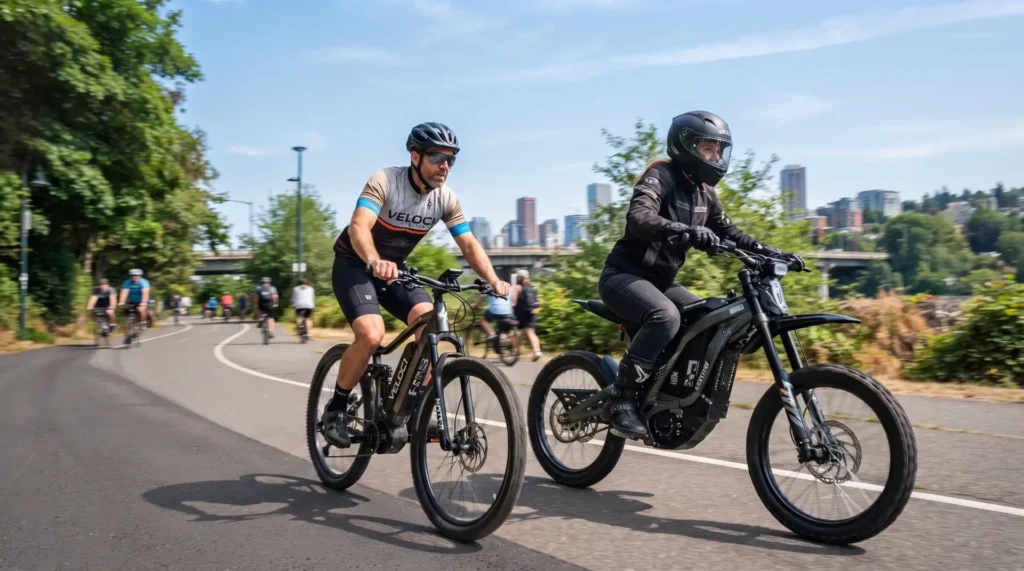
High speed e bikes and e motos may resemble conventional bicycles, but their speed, power, weight, and legal status can be very different. Cyclists should understand these distinctions before buying, riding, modifying, or sharing a route with one. The vehicle’s equipment and performance may determine where it belongs and which rules apply.
Electric mobility has expanded far beyond the traditional pedal-assist bicycle. US riders can now choose from commuter e bikes, cargo models, Class 3 speed pedelecs, moped-style machines, and electric motorcycles capable of traveling at road traffic speeds. Some models fit clearly within established e bike categories. Others occupy a confusing space between a bicycle and a registered motor vehicle.
This variety creates practical questions for cyclists. Can a powerful electric machine use a bike lane? Does it require pedals? Is a throttle allowed? What protective equipment makes sense at higher speeds? The answers often depend on the vehicle, the state, and the specific road or trail.
What Is a High Speed E Bike?
A high speed e bike generally refers to an electric bicycle designed to provide motor assistance at speeds above those offered by a basic commuter model. In many parts of the United States, a Class 3 e bike is the most familiar example. It typically provides pedal assistance up to 28 mph and includes a speedometer.
The term “high speed e bike” is not always used consistently. A seller might use it to describe a legal Class 3 bicycle. Another seller might apply the same label to a machine with a throttle, a motor far more powerful than a standard e bike motor, and an advertised speed above 30 or 40 mph.
Those differences matter. A product does not necessarily qualify as a bicycle simply because it has two wheels, pedals, and an electric motor. Riders need to examine the motor rating, assisted speed, throttle operation, pedals, vehicle identification information, and manufacturer documentation.
Federal consumer product law defines a low-speed electric bicycle as a two or three-wheeled vehicle with fully operable pedals, an electric motor under 750 watts, and a maximum motor-powered speed below 20 mph when ridden by a 170-pound person on a level paved surface. State traffic codes often use the three-class system to regulate where different e bikes may operate.
Federal product definitions and state vehicle rules serve different purposes. Meeting a federal consumer product definition does not automatically grant access to every bike lane, road, sidewalk, or trail. State and local traffic laws remain central to where a rider may use a particular machine.
What Is an E Moto?
“E moto” is an informal term commonly used for an electric motorcycle or a motorcycle-style electric machine. Many e motos have a long seat, substantial suspension, wide tires, foot pegs, and a throttle. Some resemble small dirt bikes, mopeds, or lightweight motorcycles.
An e moto may reach 30, 40, 50, or more miles per hour, depending on its design. It may also use a motor rated at several thousand watts. These specifications place many e motos outside common e bike classifications, even when decorative or minimally functional pedals have been added.
The distinction is more than a matter of vocabulary. An electric motorcycle may require registration, a license plate, insurance, approved lighting, motorcycle equipment, and an appropriate driver’s license or endorsement. A machine designed only for off-road use may not qualify for public street operation at all.
Some sellers market powerful vehicles as e bikes without explaining the rules that may apply after purchase. Product listings may emphasize range, speed, and off-road performance while offering little information about vehicle classification. Buyers should not rely on the marketing name alone.
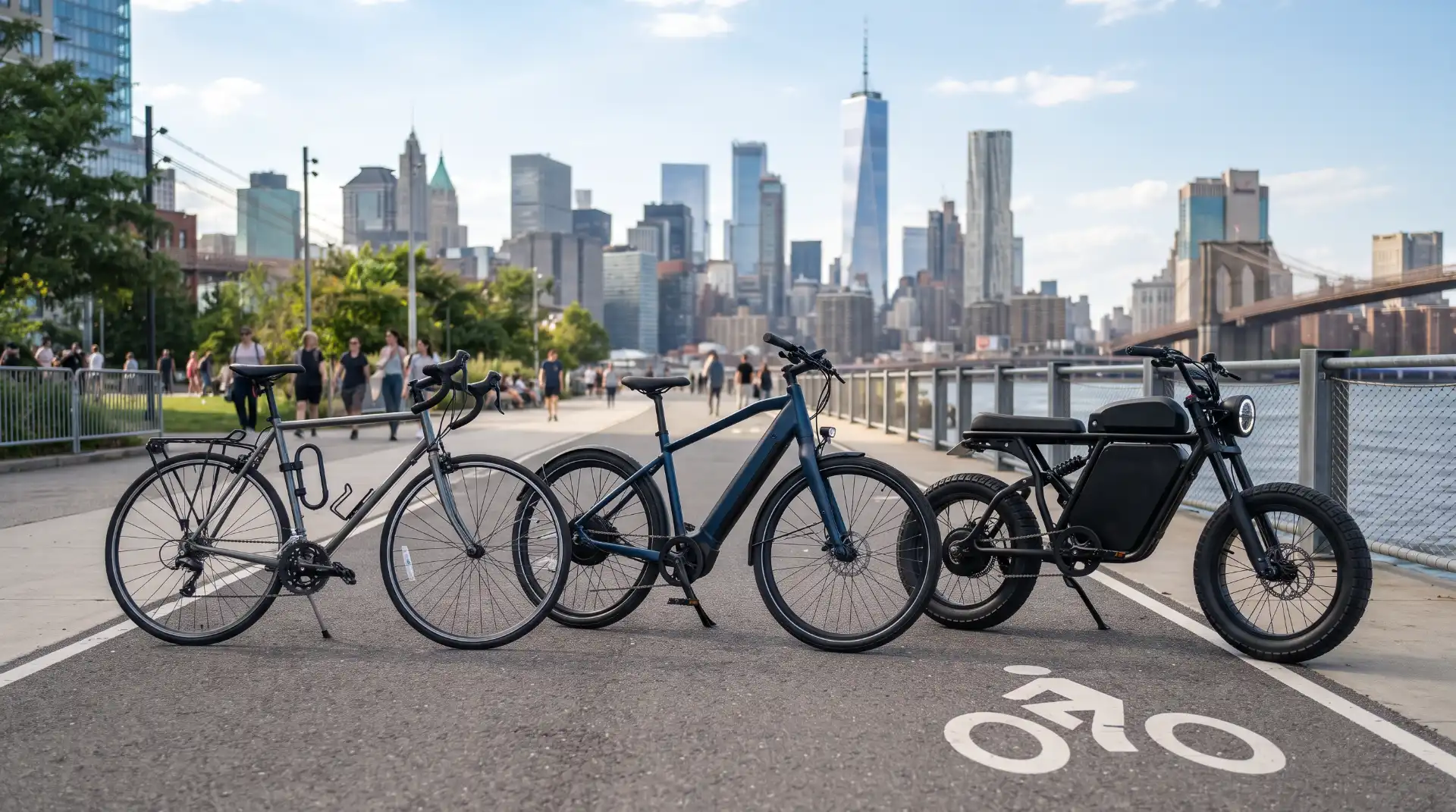
Understanding the Three E Bike Classes
Many states use a three-class structure to separate common e bikes by motor operation and assisted speed. Although the framework is widespread, individual state definitions and access rules can differ.
A Class 1 e bike generally uses pedal assistance and stops providing motor support when the bicycle reaches 20 mph. The rider must pedal for the motor to assist. These bicycles often receive access similar to conventional bicycles, although local trail restrictions may still apply.
A Class 2 e bike generally includes a throttle capable of propelling the bicycle without pedaling. Motor assistance normally stops at 20 mph. Some models combine throttle operation with pedal assistance.
A Class 3 e bike generally provides pedal assistance up to 28 mph. Depending on state law, it may face additional helmet, age, speedometer, or route restrictions. Class 3 models may be excluded from certain shared-use paths or natural-surface trails.
A vehicle capable of exceeding its class limit through motor assistance may fall outside this framework. A 35 mph throttle-powered machine, for example, should not automatically be treated as a Class 2 or Class 3 e bike merely because it has pedals.
Riders should consult their state department of motor vehicles, state transportation agency, or local government before using an unfamiliar vehicle in public. City ordinances, park rules, and trail policies may be more restrictive than statewide provisions.
Why Vehicle Classification Matters
Classification affects more than where someone may ride. It can influence licensing, registration, insurance, equipment, age restrictions, helmet requirements, and legal responsibility after a collision.
A cyclist riding a compliant e bike may generally be subject to bicycle-related traffic rules. A person operating a vehicle classified as a moped or motorcycle may have different obligations. Riding an unregistered motor vehicle in a bike lane can also create conflicts with cyclists, pedestrians, and law enforcement.
Classification may become especially important after a crash. Investigators may examine the motor rating, software settings, maximum assisted speed, throttle, pedals, and modifications. They may also look at where the vehicle was operated and whether the rider followed the rules applicable to that type of vehicle.
Insurance is another concern. A homeowners, renters, auto, motorcycle, or specialty e bike policy may define covered vehicles differently. A policy that covers an ordinary pedal-assist e bike might exclude a modified machine or one capable of exceeding a stated speed. Riders can review definitions and exclusions with the insurer before assuming coverage applies.
Speed Changes the Riding Experience
Traveling at 28 mph on an e bike is not the same as traveling at 12 or 15 mph on a conventional bicycle. The rider covers more distance during the time needed to identify a hazard and react. Corners arrive sooner, stopping distances increase, and surface defects can have more serious consequences.
Drivers and pedestrians may also misjudge the e bike’s speed. A motorist preparing to turn might see a bicycle-shaped vehicle and assume it is moving at an ordinary cycling pace. A pedestrian may step into a bike lane without recognizing that a rider is approaching at nearly 30 mph.
Higher speed reduces the time available to correct these mistakes. Cyclists need a larger following distance, earlier braking, and greater caution near driveways, intersections, bus stops, and parked cars.
Wind, road noise, and vibration also become more noticeable as speed rises. Loose clothing, poorly secured cargo, an unstable phone mount, or an incorrectly fitted helmet can become distracting. Small mechanical problems that feel manageable at low speed may become more difficult to control.
Weight and Momentum Affect Handling
Many electric bicycles weigh between 45 and 80 pounds. Cargo e bikes and motorcycle-style machines may weigh considerably more. An e moto can weigh well over 100 pounds, even when it looks compact.
Extra weight affects acceleration, braking, balance, and maneuvering. A heavy machine may feel stable while moving in a straight line but become awkward during a tight turn, emergency stop, or low-speed maneuver. Riders may also struggle to lift it after a fall.
The combination of weight and speed increases momentum. Brakes, tires, wheels, suspension, and the frame must all be appropriate for the machine’s intended performance. Bicycle components designed for casual riding may not perform well on a heavily modified vehicle traveling at motorcycle-like speeds.
Before riding, a person should become familiar with the vehicle in a controlled area. Starting, stopping, turning, looking over the shoulder, signaling, and braking firmly all feel different on a heavier electric machine.
Braking Deserves Special Attention
Effective brakes are essential on any bicycle, but higher speeds place greater demands on the braking system. Many faster e bikes use hydraulic disc brakes with large rotors because they provide stronger and more consistent stopping power than basic rim brakes.
Brake pads may wear more quickly on a heavy electric bike, particularly during hilly riding or frequent urban stops. Rotors can become contaminated, warped, or overheated. Hydraulic systems may develop leaks or require bleeding.
Riders can check both brake levers before every trip. The levers should feel firm and should not pull completely to the handlebar. The wheels should rotate freely when the brakes are released, and the brakes should engage smoothly without excessive vibration or grinding.
Stopping practice can help a rider understand how the front and rear brakes work together. The front brake supplies much of the stopping force, but abrupt or poorly controlled use may upset the bike. Progressive pressure on both brakes generally provides greater control.
For broader maintenance guidance, readers can visit How to Fix Common Bike Problems Yourself. High speed electrical or structural repairs may still call for a qualified technician familiar with the specific model.
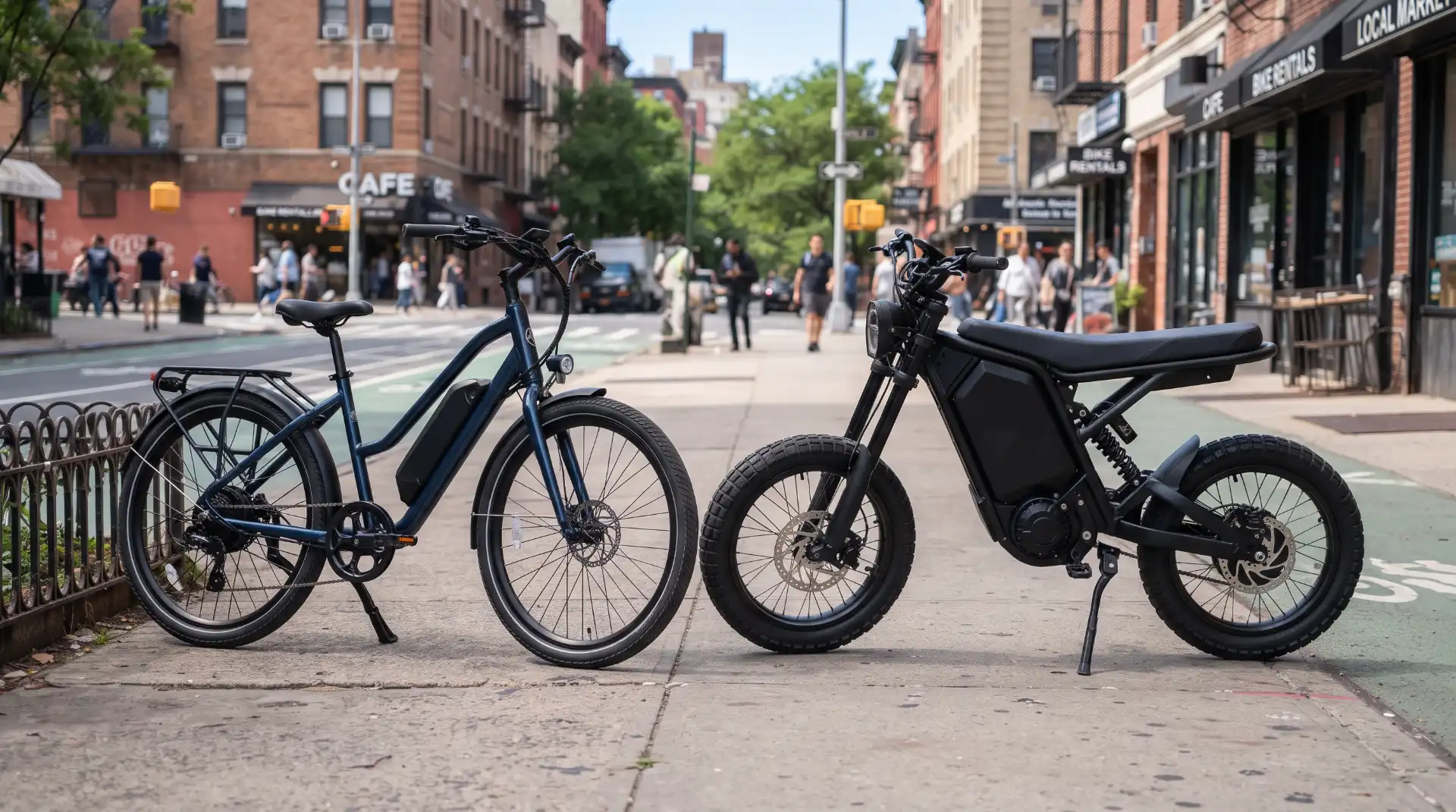
Tires Must Match the Machine and Route
Tires provide the small contact patches connecting the rider to the pavement. Their condition affects braking, cornering, comfort, and stability. A tire that is suitable for a low-speed cruiser may not be rated or constructed for a heavier and faster machine.
Riders should use the size, type, pressure range, and load rating identified by the vehicle or tire manufacturer. Underinflation can create heat, sluggish handling, and rim damage. Excessive pressure may reduce comfort and grip, particularly on rough pavement.
Tread cuts, sidewall damage, embedded debris, exposed casing, and repeated pressure loss deserve attention. An e moto using motorcycle-style tires may have different inspection and replacement requirements than a bicycle using conventional clincher tires.
Tire pressure should be checked when the tires are cold. Cargo, rider weight, road conditions, and tire design can influence the appropriate setting. A portable pump, pressure gauge, and repair supplies remain useful, although repairing a heavy e moto beside the road may require equipment beyond a standard bicycle kit.
Protective Gear Should Reflect Actual Speed
A basic bicycle helmet offers meaningful protection for ordinary cycling, but riders should think carefully about the speeds and environments involved. A high speed e bike rider regularly traveling near 28 mph may choose a helmet designed for speed e bike use. An e moto rider traveling at motorcycle speeds may need motorcycle-rated head protection.
Coverage, impact testing, retention, ventilation, visibility, and fit all matter. A helmet should sit level on the head and remain secure when fastened. Riders should replace a helmet after a substantial impact or according to the manufacturer’s guidance.
Gloves can improve grip and help protect the hands during a fall. Eye protection can block wind, insects, dust, and road debris. Durable pants, long sleeves, sturdy footwear, and abrasion-resistant outerwear provide more coverage than casual clothing.
The appropriate gear depends on the actual risk rather than the label attached to the product. Calling a 45 mph machine an e bike does not make an ordinary bicycle helmet suitable for its operating speed.
Readers comparing general cycling equipment can also review Safety First: Essential Gear Every Cyclist Should Own.
Visibility Becomes More Important at Higher Speeds
Front and rear lights help other road users detect a rider, but light placement and brightness matter. A headlight should illuminate the route without creating unnecessary glare. A rear light should remain visible from a useful distance and should not be blocked by clothing, cargo, or a passenger.
Reflective details on the helmet, jacket, backpack, wheels, or pedals can add conspicuity at night. Bright daytime running lights may also help motorists notice an approaching rider.
Turn signals and brake lights appear on some high speed models. These features may be useful, but riders should confirm that other road users can see and understand them. Hand signals remain valuable when conditions allow safe use.
Positioning also affects visibility. Riding too close to parked vehicles can place a cyclist in the door zone. Moving unpredictably between the bike lane, sidewalk, and traffic lane can make the rider difficult to track. A clear and consistent path gives others more time to respond.
Bike Lanes Are Not High Speed Traffic Lanes
Bike lanes may contain children, new cyclists, adaptive cycles, cargo bikes, delivery riders, and people moving at very different speeds. A rider traveling at 25 or 28 mph can close the distance to a slower cyclist quickly.
Passing requires space, visibility, and communication. The faster rider should consider traffic, opening car doors, road debris, lane width, and the possibility that the other cyclist may move around a pothole. A bell or calm verbal signal can help, but it does not create safe passing room by itself.
Some e motos are too fast, wide, or heavy for bicycle facilities. Even when enforcement appears limited, using a motorcycle-like machine in a narrow bike lane may expose conventional cyclists to unexpected closing speeds and limited escape space.
Shared-use paths deserve even greater caution. Walkers, runners, dogs, strollers, and children may change direction suddenly. Posted speed limits and local access rules should guide the rider. Slowing down near other users supports a more predictable environment.
Modification Can Change a Vehicle’s Status
Electric bicycles are often sold with software limits that keep motor assistance within a particular class. Owners may find online instructions, replacement controllers, display settings, or aftermarket components that remove those limits.
A modification that increases assisted speed or power can affect handling, component stress, warranty coverage, insurance, and legal classification. The original brakes, tires, wheels, fork, and frame may not have been designed for the modified performance.
Changes can also create battery and electrical risks. Mixing an incompatible battery, charger, controller, or motor may cause overheating or damage. A system that appears to function during a short test may behave differently under a sustained load, on a steep climb, or during hot weather.
Riders should understand the entire system before modifying it. Manufacturer documentation, component ratings, and local rules provide more reliable guidance than a brief social media demonstration.
Lithium-Ion Battery Safety
High speed e bikes and e motos often use large lithium-ion batteries. These packs store substantial energy and require compatible charging equipment, protective circuitry, and careful handling.
The US Consumer Product Safety Commission has urged manufacturers to comply with applicable safety standards for battery-powered micromobility products. Its guidance explains that compliance with standards such as UL 2849 for e bike electrical systems can significantly reduce fire risks. Riders can review the CPSC battery-powered product safety notice for authoritative information.
Only the charger supplied or approved for the battery should be used. Voltage and connector shape alone do not establish compatibility. Charging should take place in a dry area away from combustible materials and clear of exits.
A battery that is swollen, cracked, unusually hot, leaking, hissing, or producing an unfamiliar odor should not be charged or used. A pack involved in a crash or exposed to water may also need professional inspection.
Owners can periodically check the CPSC recall database for notices involving their battery, charger, or vehicle. Purchasing from a company that provides clear model information, replacement parts, and service support may make future safety checks easier.
Shopping for a High Speed Electric Vehicle
Buyers should begin by deciding where and how they plan to ride. A legal Class 1 or Class 3 e bike may work well for commuting on bicycle infrastructure. A powerful off-road e moto may be better suited to private property or designated motorized riding areas. A street-legal electric motorcycle serves a different purpose and carries different obligations.
Product specifications should identify motor power, assisted speed, throttle function, battery capacity, charging time, total weight, load capacity, brake type, tire size, and electrical certification. Vague or contradictory information is a reason to investigate further.
Buyers can ask whether the vehicle has a permanent class label, vehicle identification number, certificate of origin, or documentation needed for registration. They can also confirm whether replacement brake pads, tires, batteries, and chargers are available in the United States.
A test ride may reveal issues that specifications cannot. The rider can assess throttle response, pedal-assist engagement, low-speed balance, braking feel, reach to the controls, seat comfort, and ease of mounting. The vehicle should fit the rider’s body and intended route.
Young Riders and Powerful Electric Machines
High speed electric vehicles are often marketed through videos that emphasize acceleration, stunts, and off-road styling. Younger riders may be attracted to the appearance and performance without understanding the machine’s legal status or stopping distance.
Age requirements vary among states and vehicle classes. Some jurisdictions restrict Class 3 use by younger riders or require helmets. Motorcycles and mopeds may carry licensing and registration rules that a child cannot satisfy.
Parents and guardians should examine the actual specifications instead of relying on the product name. They should also consider maturity, traffic awareness, training, route conditions, protective equipment, and secure storage.
A machine capable of keeping pace with motor traffic requires more than basic bicycle control. Intersection judgment, emergency braking, lane positioning, and hazard recognition develop through instruction and practice.
Sharing the Road With E Motos
Conventional cyclists may encounter e motos on roads, trails, and bicycle paths. The unfamiliar speed and quiet motor can make interactions difficult. Riders of all vehicle types benefit from predictable movement and adequate passing space.
Cyclists should check behind before changing position, even on a protected route. Mirrors can supplement shoulder checks but should not replace awareness. Listening for traffic can help, although electric motors may produce little sound.
If an e moto approaches too closely, the cyclist should avoid sudden swerving. A steady line and gradual reduction in speed may offer more control. Confrontations on the road can create additional risk. Location, vehicle description, and video evidence may be useful when reporting repeated dangerous operation to the appropriate local authority.
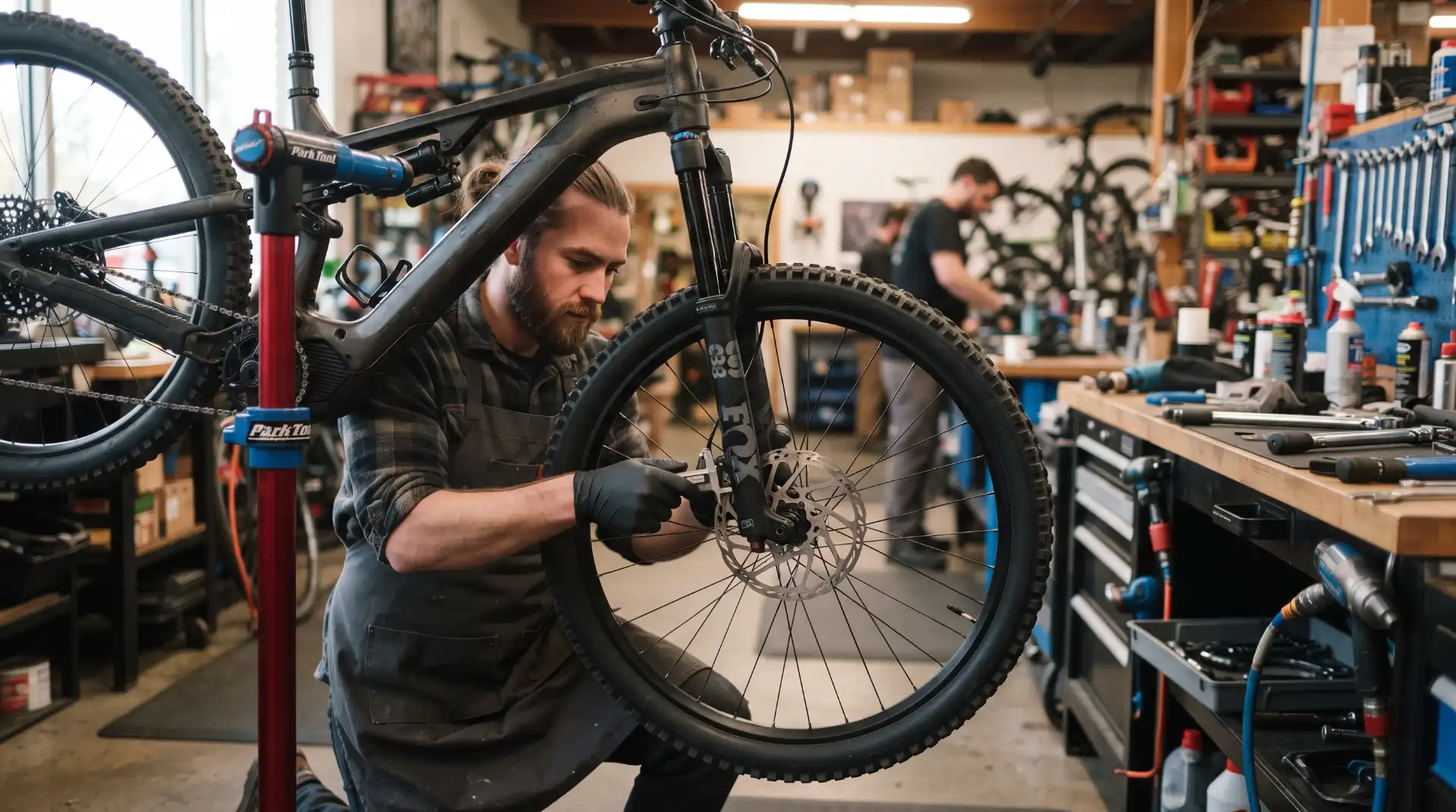
What to Check Before Every Ride
A detailed inspection does not need to take long. Riders can check tire pressure and condition, brake response, axle security, steering, lights, battery attachment, controls, and visible frame damage. Cargo should remain secure and should not interfere with the wheels or brakes.
The display should show normal information without error codes. Cables and connectors should not hang near moving components. Unusual noises, vibration, power interruptions, or changes in handling deserve attention before the vehicle returns to higher-speed use.
Route planning is also part of preparation. A legal route for a Class 1 e bike may not be legal for an e moto. Construction, steep hills, poor pavement, and missing bike lanes can affect whether the trip fits the machine and the rider’s abilities.
Responsible Speed Matters More Than Maximum Speed
A vehicle’s maximum speed is not a target for every trip. Traffic, weather, visibility, pavement, other path users, and stopping distance should influence riding speed.
Wet pavement reduces traction. Leaves, gravel, sand, painted markings, metal covers, and ice can become slippery. Darkness limits the rider’s ability to identify hazards. Strong crosswinds can move a light vehicle sideways, particularly on exposed roads or bridges.
Slowing down creates time and space. It also reduces pressure on the brakes, tires, and rider. A high speed e bike can still be useful when operated below its maximum assistance level.
The Bottom Line for US Cyclists
High speed e bikes and e motos expand transportation and recreation choices, but they should not all be treated as ordinary bicycles. A legal Class 3 e bike, an off-road electric dirt bike, and a street-legal electric motorcycle may look similar while operating under very different rules.
Before riding, cyclists should identify the vehicle’s power, assisted speed, throttle function, equipment, certification, and legal classification. State and local sources can clarify registration, licensing, helmet, age, and route requirements.
Safe operation also depends on realistic preparation. Strong brakes, appropriate tires, visible lighting, suitable protective gear, battery care, and controlled practice become more significant as speed and weight increase.
The most useful question is not simply how fast an electric machine can travel. Cyclists should also ask whether the vehicle, rider, equipment, and route are prepared for that speed. Clear classification and responsible operation can help different forms of electric mobility share US roads and paths more predictably.