
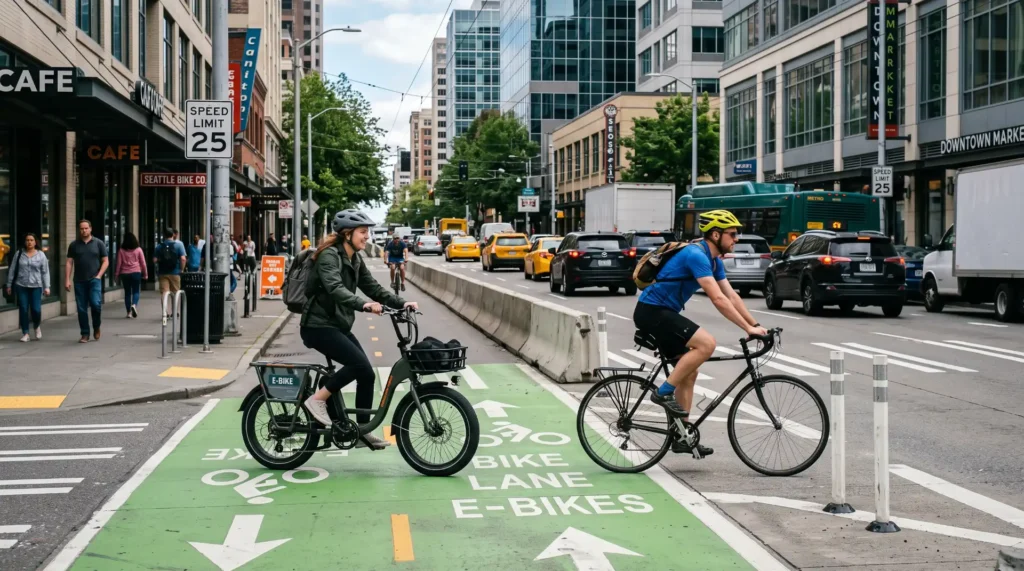
Electric bikes, commonly known as e-bikes, have rapidly changed cycling in the United States. They are now a common sight in cities, suburbs, and even rural commuting routes. With their rising popularity, a major question has emerged among riders, commuters, and safety experts: are e-bikes more dangerous than regular bicycles?
The answer is not simple. E-bikes introduce new safety risks due to speed and weight, but they also provide advantages that can improve rider control and reduce certain types of accidents. To understand the real impact, it is important to look at how e-bikes function, how accidents occur, and what safety trends are showing across the US.
 What Makes E-Bikes Different From Regular Bikes
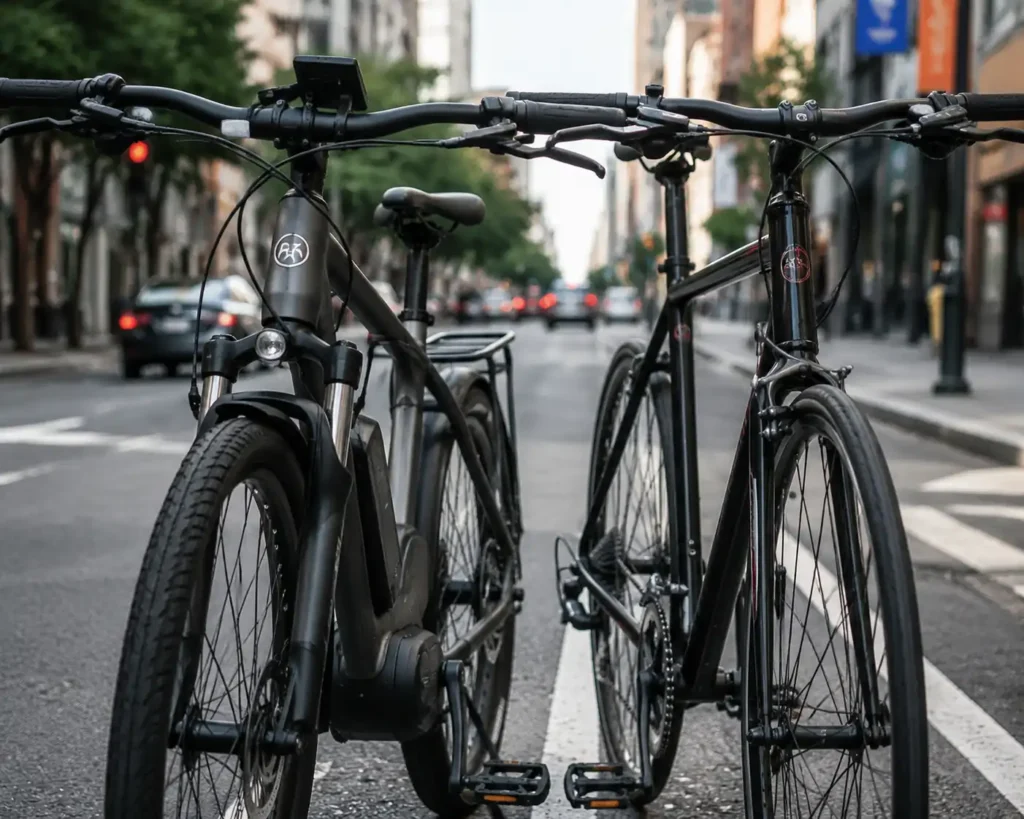
A traditional bicycle relies entirely on human pedaling power. Speed depends on the rider’s effort, fitness level, and terrain. In contrast, an e-bike includes an electric motor that assists pedaling or, in some cases, fully powers the bike through a throttle.
In the United States, e-bikes are generally divided into three classes:
- Class 1: pedal-assist only, up to 20 mph
- Class 2: throttle-assisted, up to 20 mph
- Class 3: pedal-assist, up to 28 mph
This difference in speed capability is one of the most important safety factors. Even a small increase in speed significantly affects stopping distance, reaction time, and crash severity in urban traffic environments.
Why E-Bikes May Be Considered More Dangerous
One of the main concerns with e-bikes is their higher speed potential. Most traditional cyclists travel between 10 and 15 mph in city conditions, while e-bikes can easily exceed 20 mph and sometimes reach 28 mph or more depending on classification.
Higher speed reduces reaction time. In busy US cities where cyclists share roads with cars, pedestrians, and delivery vehicles, this reduced reaction window increases the risk of collisions at intersections, driveways, and bike lane crossings.
Another concern is bike weight. E-bikes are significantly heavier than standard bicycles due to batteries and motors. This extra weight can make sudden braking more difficult and increase the force of impact in a crash.
Crash severity is also a major factor. When collisions occur at higher speeds, the likelihood of serious injuries such as fractures, head trauma, and internal injuries increases significantly, even when helmets are worn.
The Safety Advantages of E-Bikes
Despite the concerns, e-bikes are not automatically more dangerous in every situation. In fact, they can improve safety in certain conditions.
One advantage is reduced physical fatigue. Traditional cycling over long distances or uphill terrain can lead to exhaustion, which may affect balance and decision-making. E-bikes reduce strain, allowing riders to maintain more consistent control.
Another benefit is traffic flow matching. In many urban environments, traditional cyclists move significantly slower than surrounding vehicles. This speed mismatch can create dangerous passing situations. E-bikes help reduce that gap, allowing cyclists to move more predictably with traffic patterns.
E-bikes also provide accessibility benefits. Older adults, commuters, and riders with physical limitations can use e-bikes instead of cars for short trips. This can reduce exposure to higher-risk driving environments.
What US Safety Data Suggests
Bicycle-related injuries in the United States have been increasing in many urban areas over the past decade. However, separating e-bike incidents from traditional bicycle crashes remains difficult due to inconsistent reporting systems.
Transportation safety agencies such as the National Highway Traffic Safety Administration (NHTSA) have noted an overall rise in micromobility-related incidents, including e-bikes and scooters. However, much of this increase is tied to higher usage rates rather than purely higher danger levels.
More riders on e-bikes naturally lead to more recorded incidents. The key question is whether e-bike riders face higher injury rates per trip compared to traditional cyclists, and research on this is still developing.
What is consistently observed, however, is that speed plays a major role in injury severity. The faster the speed at the time of impact, the greater the likelihood of serious harm.
 Common Types of E-Bike Accidents
E-bike crashes often resemble traditional bicycle accidents but tend to happen with greater force.
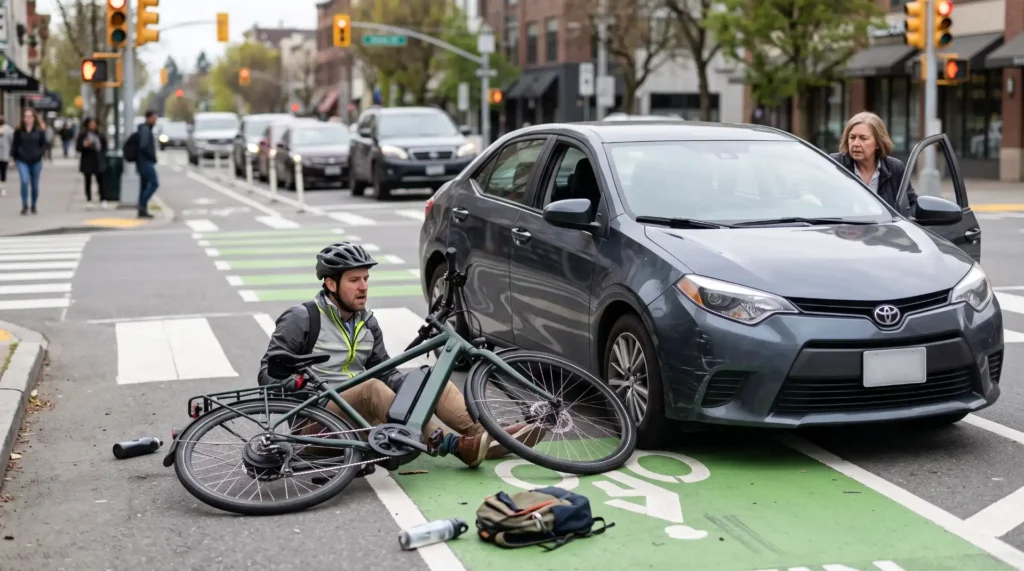
One of the most common scenarios is intersection collisions. Drivers may misjudge the speed of an approaching e-bike and attempt turns or crossings that lead to impact.
Dooring accidents are also common in urban bike lanes. When parked vehicle doors open suddenly, faster-moving e-bike riders may have less time to react compared to slower cyclists.
Loss of control is another frequent issue. Sudden acceleration, improper braking, or uneven road surfaces can cause riders to fall, especially those new to e-bikes.
Nighttime riding increases risk further due to reduced visibility and limited reaction time at higher speeds.
Rider Experience Plays a Major Role
One of the most important factors in e-bike safety is rider experience. Many new users transition directly from walking or driving to e-bikes without prior cycling experience.
Unlike traditional bicycles, e-bikes require adjustment to acceleration, braking distance, and handling at higher speeds. Riders unfamiliar with these differences are more likely to misjudge turns, stops, and traffic situations.
Traditional bicycles generally allow more margin for error due to lower speed. E-bikes require faster decision-making and better situational awareness.
Training and gradual adaptation can significantly reduce accident risk, especially for first-time riders in busy urban areas.
 Infrastructure and City Design Challenges
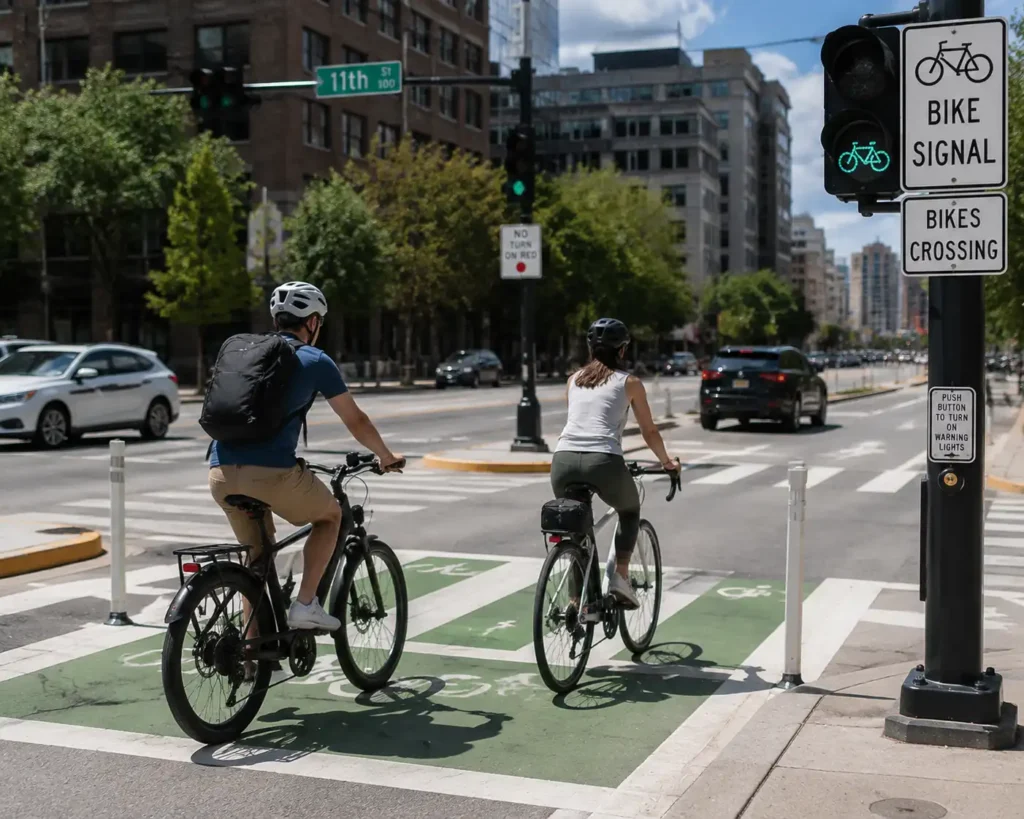
Many US cities were not originally designed for high-speed e-bike traffic. Most bike lanes were built for slower, human-powered bicycles rather than motor-assisted vehicles.
Narrow lanes, mixed traffic conditions, and unclear intersections can create conflict points between cyclists and vehicles. These risks become more serious when e-bikes travel at higher speeds.
Cities with protected bike lanes and separated cycling infrastructure generally report fewer severe bicycle injuries. This highlights that safety depends not only on the rider or bike type but also on road design
Conclusion
E-bikes are not inherently more dangerous than regular bicycles, but they do change the nature of cycling risk.
Higher speeds, heavier frames, and inexperienced riders can increase crash severity. At the same time, e-bikes offer improved mobility, better traffic integration, and accessibility benefits that can enhance safety when used properly.
Ultimately, the safety difference depends on rider behavior, road conditions, and infrastructure quality. A well-trained rider using an e-bike responsibly in a safe cycling environment may face no greater risk than a traditional cyclist. However, misuse or high-speed riding in unsafe areas can increase danger significantly.
As e-bike adoption continues to grow across the United States, better education, awareness, and infrastructure will play a key role in improving safety outcomes for all cyclists.